
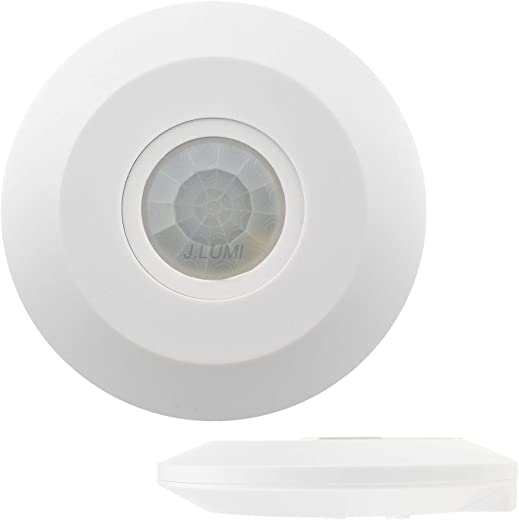

J.LUMI YCA1050 PIR Motion Sensor Light Switch 2000W, Ceiling Mount Motion Sensor Ceiling Motion Sensor Switch, PIR Sensor, with Slim Design, White…
$14.98
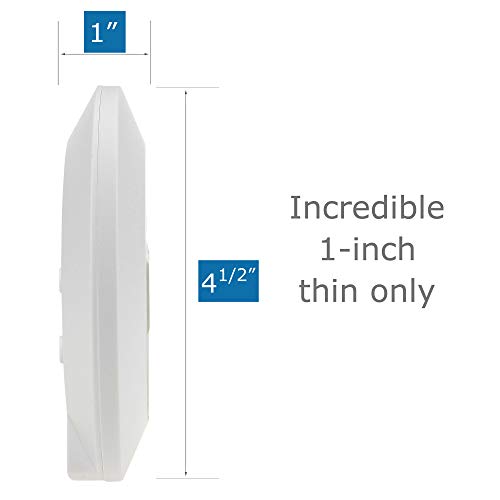
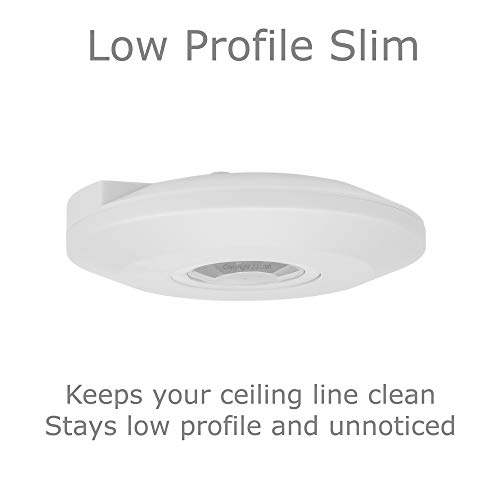
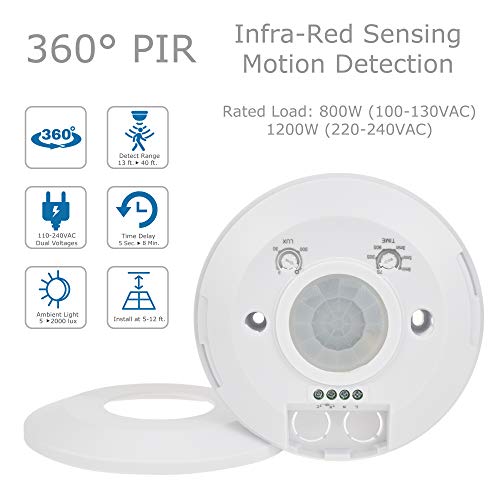
- | ULTRA SLIM | Say good-bye to your bulky motion detectors. This all new designed PIR motion sensor features an amazing thin profile of 1-inch thickness only. Keep your ceiling line clean with this unconventional slim PIR ceiling occupancy sensor.
- | FULL DETECTION CAPABILITY | Features 360-degree surround and 160-degree downward detection. Detection range 50-ft (with clear line of sight between sensor and moving objects) at 70’F working temperature.
- | PASSIVE INFRARED TECHNOGY | Uses infrared signals to detect moving objects. Will not produce significant heat and extremely energy efficient. IP22 for indoor use only.
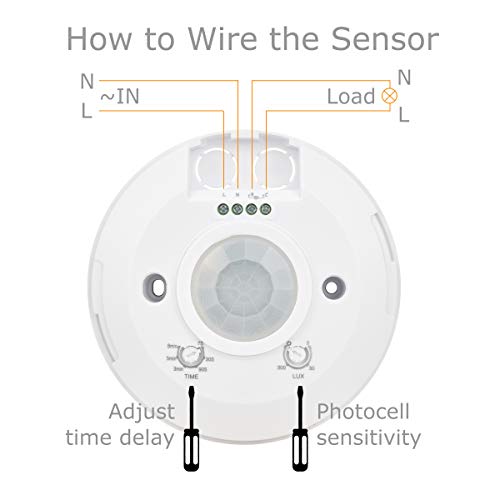
- | PHOTOCELL ENABLED | Built in photocell with adjustable sensitivity to turn on your light only when needed.
- | HOME AND BUSINESS USE | Install this motion sensor in your laundry room, garage and hall way for automatic lighting day or night. Ideal for houses with elderly persons for the safety of family members. Connect with your alarm to trigger warning. Slim and flat profile makes this sensor unnoticeable but safeguards your house 24/7.
Specification: J.LUMI YCA1050 PIR Motion Sensor Light Switch 2000W, Ceiling Mount Motion Sensor Ceiling Motion Sensor Switch, PIR Sensor, with Slim Design, White…
| Product Dimensions | 4.53 x 4.53 x 0.98 inches |
|---|---|
| Item Weight | 3.2 ounces |
| Item model number | YCA1050 |
| Is Discontinued By Manufacturer | No |
| Date First Available | December 7, 2017 |
| Manufacturer | MAINFAIN |
3 reviews for J.LUMI YCA1050 PIR Motion Sensor Light Switch 2000W, Ceiling Mount Motion Sensor Ceiling Motion Sensor Switch, PIR Sensor, with Slim Design, White…
Add a review
Related Products

Added to wishlistRemoved from wishlist 0

Added to wishlistRemoved from wishlist 0
Added to wishlistRemoved from wishlist 0
Andy G –
After looking around the big box home improvement store websites and finding all of the motion sensors for $75+, I went searching on amazon. I found this J Lumi sensor and for the price decided to give it a shot. I bought three for less than half of what I could find them for elsewhere and to my surprise they work exactly as I hoped. The closets only had pull chain fixtures with no wall switch, so a ceiling mounted solution seemed like an easier fit. I’m from Texas in the US, and they work fine with my standard 120V, 60 Hz house wiring. I finished installing the third in my third bedroom closet yesterday. They were installed somewhat close to the door frame to avoid false tripping from inside the bedroom. All three have been working perfectly. I read some complaints about the wire size. I used 14/2 solid romex from the hardware store and didn’t have any trouble. I would suspect 12/2 wouldn’t be much trouble either. I did have to go into the attic to jumper the wiring from the existing fixture to the sensor and back. All connections were made from inside the living space, but I had to feed the wiring down to the sensor. Each sensor has 4 clearly marked terminals for line side and load side connections. It does not include a ground connection, though if you were installing in a similar situation to me, the existing electrical box would presumably have a ground wire to the existing fixture.
I’m here to buy a couple more after the dog chewed one of the trim rings during installation, and to add one to another room.
One slight critique to the design: I would prefer that it sat more flush to the ceilng. Instead of a dome shape where the fattest part would sit flush it is more like a full UFO shape where it flares out but then goes back in. It mounts well and isn’t loose or janky looking, but I would prefer a cleaner look. For the price, or even for twice the price, I am fully satisfied with the product.
Amazon Customer –
I’ll start with the positive:
Operation: as advertised. All fuctions seem to work well; except for the audible click, when it switches to on.
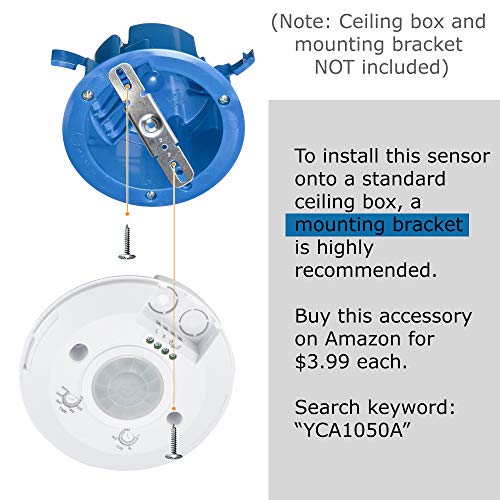
Installation: This is a classic case of the engineer not consulting with the installer. They designed a beautiful compact flying saucer with great lines; BUT, there is no position for the ground wire, and there is no way to mount this to a ceiling box to deal with that contingency. I had to break out some very old avionics skills to create a solution that didn’t leave uninsulated wires in my attic.
Instructions: They’re just plain awful. The whole thing leaves you scratching your head. It’s as though they tossed someone the disk, and left them to just look at it and imagine how you might wire and stick it to the ceiling. There are no directives on how far to strip outer or inner insulation, or bending measurements to land into the insertion screw terminals, and disregards that there’s a ground wire at all! ….much less how to have a splice fit into the 1 1/2” x 1/2” internal “box”. The wiring “diagram” looks like it was scribbled on a bar napkin; leaving orientation up to your imagination. You’d do better to burn the instructions; using the firelight to see while you figure it out yourself!!
I came up with: strip the outer insulation on Romex to about an inch and a half, line and neutral inner insulation to 3/16”, and ground to 1”. Bend line and neutral at 1/4” below outer insulation to 90 degrees for insertion, and use a two terminal “stab lock” type connection for ground wires that will fit within the device instead of a threaded wire nut.
Dino Chiesa –
I like this device. It works well, works perfectly in my situation.
Installation
It was relatively simple to install. I’ve got experience installing electrical devices – outlets, switches, light fixtures. Installing this involves *about* the same level of complexity.
I say “about”, because it’s a little more complicated: you’ve got to have access to the line, and that’s most likely when you’re installing new fixtures or when you’re working in a garage with an unfinished ceiling.
The biggest gripe I have is with the way the lines connect into the device. Most of us are accustomed to the familiar reliable connections on a 110/120 3-way receptical. You can simply insert stripped lines into the back and they auto-clamp, or you can use a #2 Philips screwdriver to clamp the wires. This device does not match that experience. The low-profile design of the device is part of the problem. the lines enter into the underside of the device (ceiling side) and then immediately turn 90 degrees. Immediately means, within 1/4 inch. There is a clamping attachment for neutral and hot for the line in, and for the load. There is no mutual ground.
Because of the small space, the clamping screws are tiny. I needed a special small (tiny!) philips screwdriver to turn the screws. The _feeling_ was a problem too; it took me a few tries to feel certain that the lines were attached properly. Again, this is because of the low profile. And I had to rig a neutral junction with a wire nut (not provided) in very little space.
Because of the novel attachment setup, I wonder if this device does passes electrical code in most states. I’m no expert but the connections are not of the same caliber as most devices I have installed in my home.
The code is there for a reason – consistency leads to long term safety even in unusual circumstances. I wonder how reliable these connections will be ina tremor, or even with normal house shifts.
Performance
The unit works great. Once installed it works like a charm. Now when I move the car into the garage, the two LED light bars turn on automatically. This makes it much safer in the evening, as I get out of the car. It does just what I wanted it to do.
It’s easy to adjust, although again you need a tiny screwdriver to make those adjustments. The instructions are clear on how it works and what the 2 controls do for you.
Construction
The device appears to be constructed well. The circuit board is well anchored and the case is reasonably durable. It’s just too small.
There’s a warranty on the device – 1 year! And that’s amazing. I don’t expect to have to replace hard-wired electrical devices after a year. If I DO have to replace it, I’ll use a different device. it will be a challenge, though, because I’ve cut the lines short enough to accommodate the “low profile” of THIS device. Any device with a deeper profile will need longer lines.